What fashion brand NAME IT learns from mystery shopping research across 207 stores
3/4/2026
At our Client Day, Linda Timmer, International Retail Manager at NAME IT, shared how they use mystery shopping to grow from good to excellent. It was an inspiring story about measuring, learning, improving, and growing as a team. After one year of mystery shopping research by Secret View, the childrenswear brand not only sees clear areas for improvement, but has also built a close-knit team that is striving for growth together.
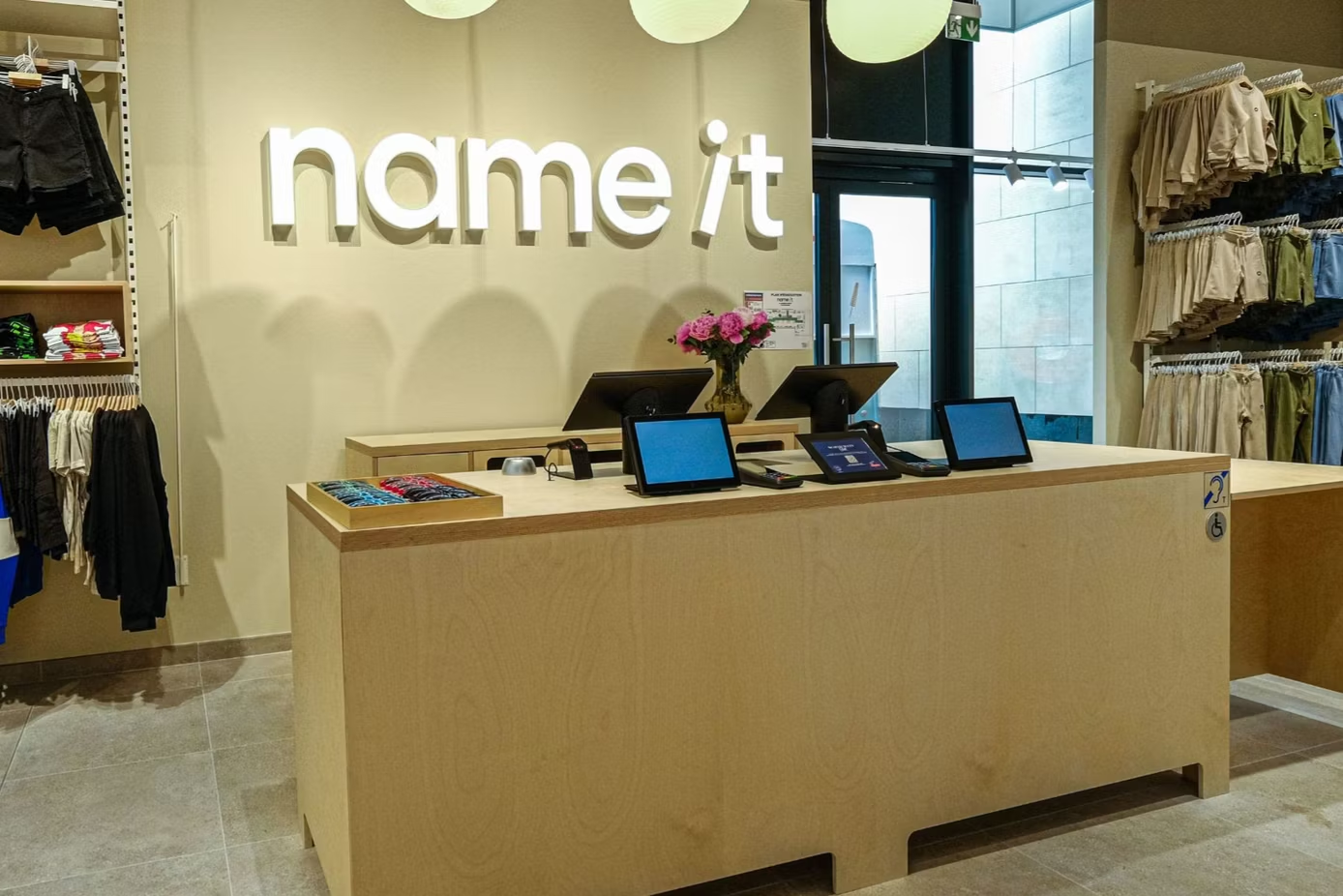
Who is NAME IT?
NAME IT is not just another childrenswear brand. With 40 years of experience, 207 stores across Europe, and roots in Bestseller, the family-owned company behind brands such as ONLY, Jack & Jones and VERO MODA, NAME IT has grown into a major player in the European children’s fashion market.
With 207 owned stores and an ambitious expansion strategy, NAME IT aims to become Europe’s largest childrenswear retailer. But growth alone is not enough.
“We also want to deliver the right brand experience,” Linda emphasizes. “Customers need to see the collection presented in the right way and have an experience that matches our brand.”
Why mystery shopping?
After the coronavirus pandemic, NAME IT faced new challenges. Digitalisation accelerated rapidly, but service levels in physical stores also needed to improve.
“We noticed that Gen Z requires a different approach,” Linda explains. “And we did not just want to believe we were doing well, we wanted to be sure.”
For NAME IT, mystery shopping research focuses on three key goals:
1. Providing well-founded feedback
“If we want to give feedback, it has to be well-founded,” Linda explains. Mystery visits provide objective data that managers can actually work with. No gut feeling, but clear insights into what is really happening on the shop floor.
2. Creating awareness among employees
Employees often think they are doing everything right. But customers may experience their visit in a completely different way. Mystery shopping reports make this visible and spark conversations about what truly matters: the customer.
3. Shifting from control to coaching
For NAME IT, it is important that employees do not see the research as a way of monitoring them. It is about creating awareness from the very beginning. That starts during onboarding, where employees get to know the Bestseller and NAME IT culture.
The results after one year of mystery shopping research
Together with Secret View, NAME IT aligned the questionnaire with its sales training and brand vision. As a result, mystery guests assess exactly the aspects that matter most to NAME IT, such as:
- product knowledge (for example denim, their specialty)
- giving advice
- offering the loyalty programme
What stands out is the transparency. Scores are discussed openly, both when results fall short and when stores perform very well. And that openness works. Store managers are actively engaged, Linda says enthusiastically:
“I can see that mystery shopping research is hugely alive among our store managers. They can’t wait for the next report to come in. And that is actually really great to see.”
After one year, NAME IT sees clear patterns:
- high scores on welcome, needs assessment and product knowledge
- many opportunities in upselling
- stores that score higher on product knowledge and advice also achieve better sales results
- recognisable periods in which scores are lower, for example during sale periods
Those sale periods also provide an important insight. Not only for the store teams, but also for head office.
“We immediately see what happens when stores are extra busy, and the effect that has on the customer experience.”
What makes NAME IT’s approach successful?
1. Turning data into immediate action
NAME IT links results directly to action. If a store scores lower on upselling, the area manager addresses it through targeted training and coaching. Not generic theory, but coaching based on real situations.
2. A positive learning culture
“We do not see low scores as punishment, but as an opportunity to grow,” Linda says. NAME IT works with regular check-ins, where store managers discuss with their teams what is happening in the store and what the Secret View results show.
3. Continuous optimisation
Secret View and NAME IT continuously evaluate and optimise the mystery shopping research. Are the questions still relevant, and do mystery shoppers interpret them correctly?
“We recently launched a loyalty programme as well. We added a few extra questions about that to the Secret View questionnaire,” Linda explains. “That way, together with Secret View, we keep refining the questionnaire step by step.”
Would you like this for your stores too?
Curious how mystery shopping research can help your teams grow, without feeling like a control mechanism? Book a demo and we will show you how to turn insights into action.
.jpg)